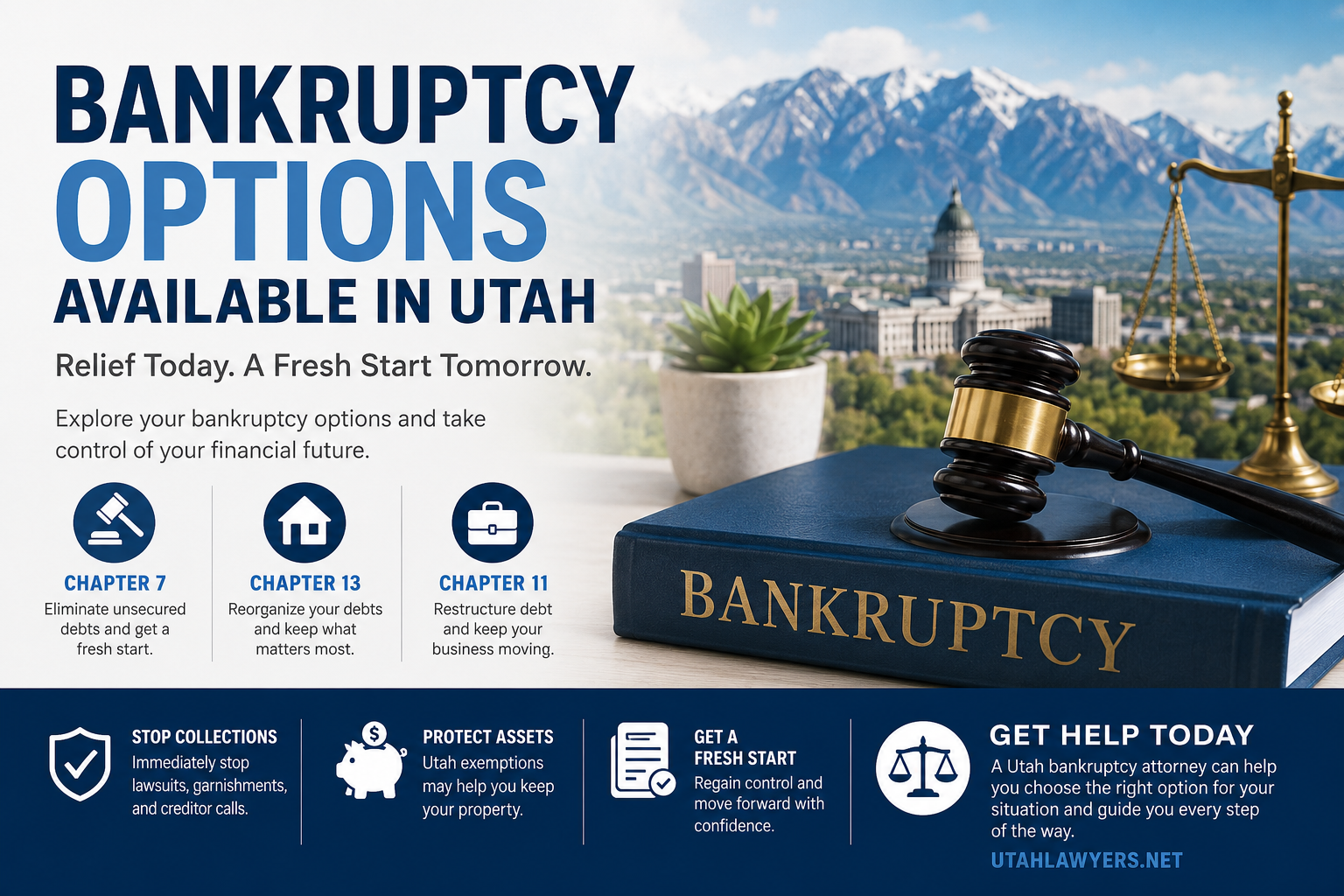
Bankruptcy Options Available in Utah
Financial hardship can happen to anyone. Medical bills, job loss, divorce, rising living expenses, or unexpected emergencies can leave Utah families overwhelmed by debt. Fortunately, bankruptcy laws provide individuals and businesses with legal options to eliminate or reorganize debt while protecting important assets.
Understanding your bankruptcy options is the first step toward regaining financial stability. This guide explains the most common forms of bankruptcy available in Utah, how each works, who qualifies, and when it may be time to speak with an experienced Utah bankruptcy attorney.
What Is Bankruptcy?
Bankruptcy is a legal process governed by federal law that allows individuals and businesses to eliminate or reorganize certain debts under the protection of the federal bankruptcy court. Filing bankruptcy immediately triggers an automatic stay, which generally stops:
- Collection calls
- Lawsuits
- Wage garnishments
- Bank levies
- Foreclosure proceedings
- Vehicle repossessions
- Creditor harassment
While bankruptcy can provide significant relief, choosing the right chapter depends on your income, assets, debts, and long-term financial goals.
Common Bankruptcy Options in Utah
Most consumers file one of two bankruptcy chapters:
Chapter 7 Bankruptcy
Chapter 7 is often called liquidation bankruptcy or fresh start bankruptcy.
This option is designed for people who cannot realistically repay their debts.
Chapter 7 may eliminate:
- Credit card debt
- Medical bills
- Personal loans
- Payday loans
- Utility balances
- Collection accounts
- Certain judgments
Many Chapter 7 cases are “no-asset” cases, meaning the debtor keeps all exempt property while eligible unsecured debts are discharged. Qualification is generally based on the federal means test and other requirements. (Utah Bankruptcy Court)
Advantages
- Usually completed within 3–4 months
- Eliminates most unsecured debt
- Stops collection efforts immediately
- Fresh financial start
Potential Disadvantages
- Certain assets may be sold if they are not protected by exemptions
- Not all debts can be discharged
- Appears on your credit report for up to 10 years
Chapter 13 Bankruptcy
Chapter 13 is designed for individuals with regular income who want to reorganize debt instead of eliminating it immediately.
Instead of liquidating assets, debtors make affordable monthly payments under a court-approved repayment plan lasting three to five years. Chapter 13 often helps people catch up on missed mortgage or vehicle payments while keeping their property.
Chapter 13 can help:
- Stop foreclosure
- Prevent vehicle repossession
- Catch up on mortgage payments
- Pay tax debt over time
- Protect valuable assets
Advantages
- Keep your home
- Keep your vehicle
- Consolidate debts
- Lower monthly payments
- Stop creditor lawsuits
Potential Disadvantages
- Longer repayment period
- Requires consistent income
- Court supervision throughout the plan
Chapter 11 Bankruptcy
Although less common for individuals, Chapter 11 is primarily used by:
- Businesses
- Partnerships
- Corporations
- High-income individuals with complex finances
Chapter 11 allows debt restructuring while continuing business operations.
Which Bankruptcy Is Right for You?
| Situation | Best Option |
|---|---|
| Little income and high unsecured debt | Chapter 7 |
| Behind on mortgage | Chapter 13 |
| Behind on car payments | Chapter 13 |
| Own a business | Chapter 11 |
| Large amount of medical debt | Chapter 7 |
| Need to stop foreclosure | Chapter 13 |
Utah Bankruptcy Exemptions
Utah is an opt-out state, meaning most filers use Utah’s exemption laws rather than the federal exemption scheme. Exemptions determine what property you may be able to protect during bankruptcy. Current Utah law includes protections for qualifying home equity, vehicles, tools of the trade, household goods, and certain retirement accounts, among other assets. Because exemption amounts can change, an attorney should review the current limits before filing.
Debts That Can Often Be Eliminated
Many unsecured debts may qualify for discharge:
- Credit cards
- Medical bills
- Personal loans
- Collection accounts
- Utility bills
- Payday loans
- Older lease obligations
- Certain civil judgments
Debts Usually Not Discharged
Some obligations generally survive bankruptcy, including:
- Child support
- Alimony
- Most recent tax obligations
- Most student loans (subject to limited exceptions)
- Criminal fines
- Restitution
The Bankruptcy Filing Process
Most cases follow these steps:
- Meet with a bankruptcy attorney.
- Gather financial records.
- Complete required credit counseling.
- File your bankruptcy petition.
- The automatic stay goes into effect.
- Attend the meeting of creditors.
- Complete any required financial education course.
- Receive a discharge if all requirements are satisfied.
Federal law requires approved credit counseling before filing and a debtor education course before discharge. (Utah Bankruptcy Court)
Benefits of Hiring a Utah Bankruptcy Attorney
An experienced attorney can:
- Evaluate all bankruptcy options
- Protect exempt property
- Prevent costly filing mistakes
- Handle creditor communications
- Prepare court documents
- Represent you throughout the bankruptcy process
Alternatives to Bankruptcy
Bankruptcy is not the right solution for everyone.
Depending on your circumstances, alternatives may include:
- Debt settlement
- Debt consolidation
- Loan modification
- Mortgage refinancing
- Credit counseling
- Negotiating directly with creditors
A bankruptcy attorney can help determine whether these alternatives are realistic.
Frequently Asked Questions
Will I lose my house?
Not necessarily. Many Utah homeowners keep their homes, especially under Chapter 13 or when their equity is protected by applicable exemptions.
Can I keep my car?
Often yes, depending on the bankruptcy chapter, available exemptions, and whether you remain current on required payments.
How long does bankruptcy take?
Chapter 7 generally concludes in about three to four months, while Chapter 13 involves a three- to five-year repayment plan before discharge. (chapter7vs13.org)
Will bankruptcy ruin my credit forever?
No. Although bankruptcy affects your credit, many people begin rebuilding credit soon after receiving a discharge through responsible financial management.
Can creditors still contact me?
After filing, the automatic stay generally prohibits most collection activity.
When Should You Contact a Utah Bankruptcy Lawyer?
If you are:
- Facing foreclosure
- Behind on mortgage payments
- Receiving collection calls
- Being sued by creditors
- Experiencing wage garnishment
- Considering debt settlement
- Unable to pay your monthly bills
it may be time to discuss your legal options with a Utah bankruptcy attorney.
Final Thoughts
Bankruptcy is designed to provide honest individuals and businesses with an opportunity for a fresh financial start. Whether Chapter 7, Chapter 13, or another form of relief is appropriate depends on your unique financial situation, income, assets, and goals.
A knowledgeable Utah bankruptcy attorney can explain your options, help protect your property, and guide you through every step of the process.
Helpful Links
- The Complete Guide to Hiring a Utah Lawyer in 2026
- How Probate Works in Utah
- Estate Planning Checklist Every Utah Family Needs
- Understanding Utah DUI Laws in 2026
- How Much Does a Lawyer Cost in Utah?
Comments are closed